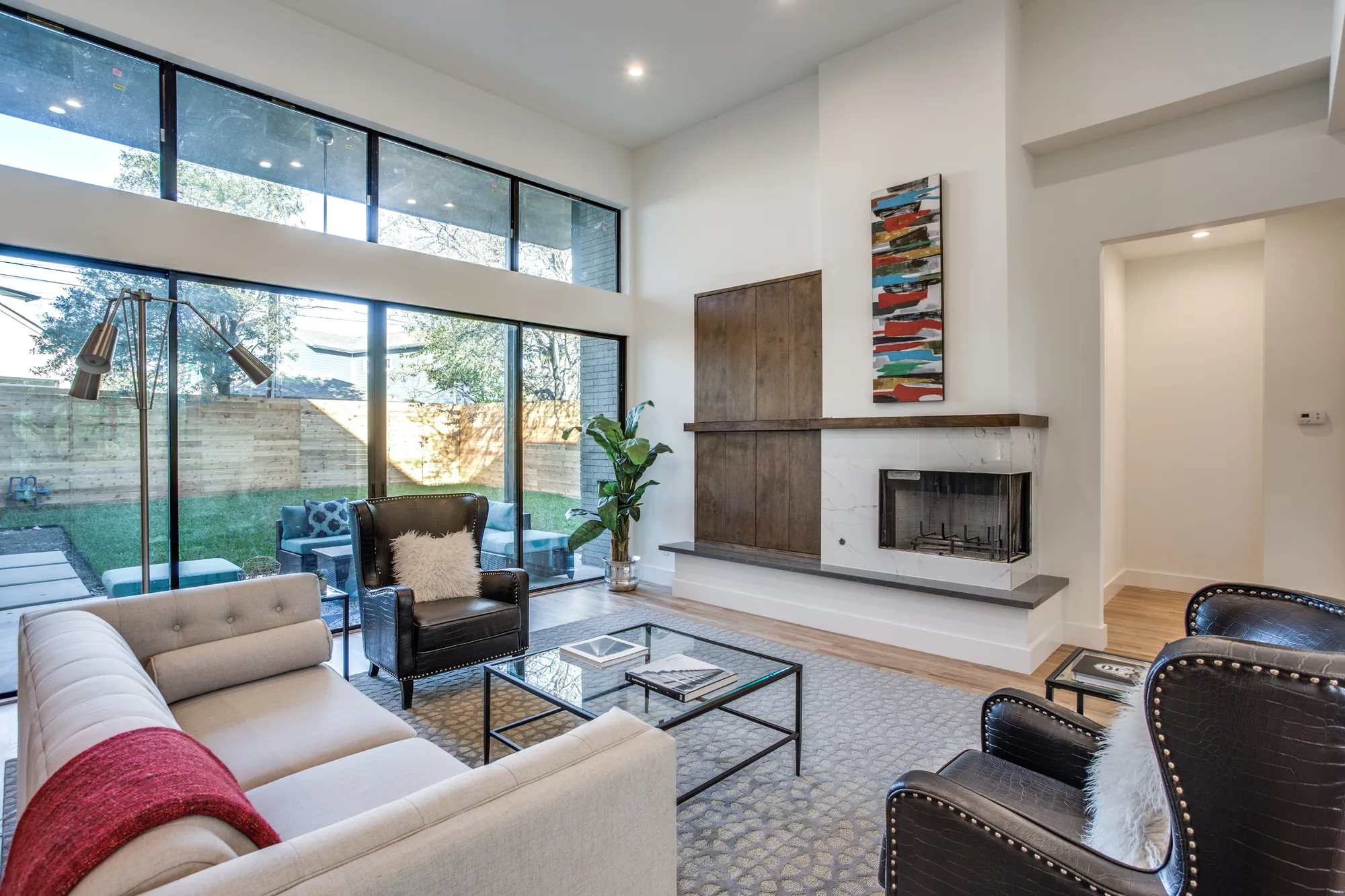
Early in almost every project, someone asks: what style should the house be? It is a reasonable question, but the way it is usually answered, by scrolling through photos, gets things backward. A style is not a skin. It is a way of organizing proportion, material, light, and how rooms relate to one another and to the outdoors. Choose it well and it will shape a house you love for decades. Choose it for novelty and it will date faster than the appliances.
Here are the styles we find suit Dallas best, with examples from our own work.
Spanish Colonial
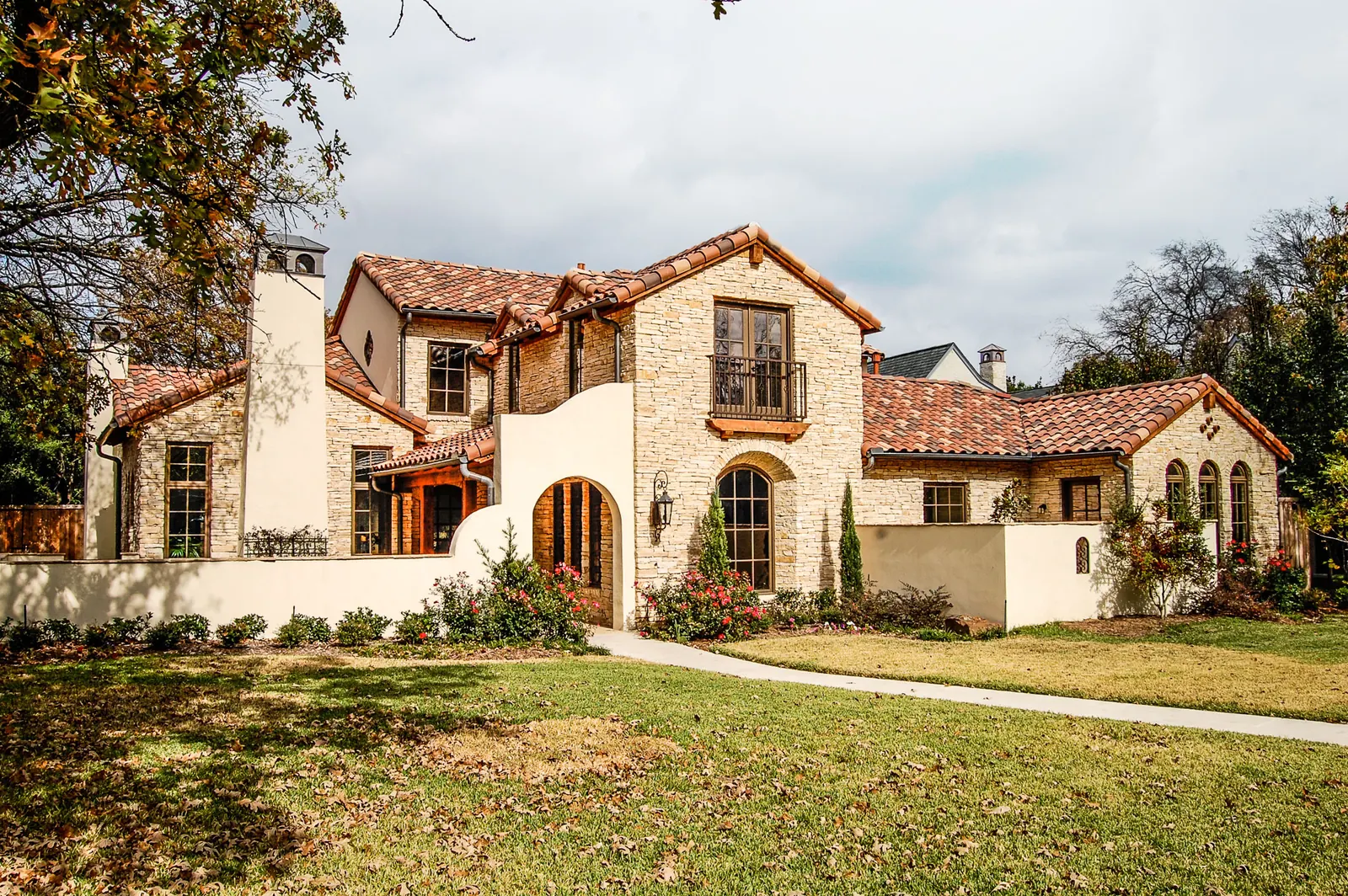
Thick stucco walls, clay tile roofs, deep-set windows, arches, courtyards, and hand-crafted details in wood and iron. Spanish Colonial suits the Texas climate naturally: deep openings shade glass, courtyards create sheltered outdoor rooms, and heavy materials feel cool in summer.
It depends on authenticity more than most styles. Real plaster, real tile, true divided lights, and ironwork made by hand are what separate a timeless Spanish Colonial home from a stucco box with a tile roof. Our home at 5501 Caruth leans into warm materials and quiet symmetry for exactly that reason.
Texas Hill Country and transitional
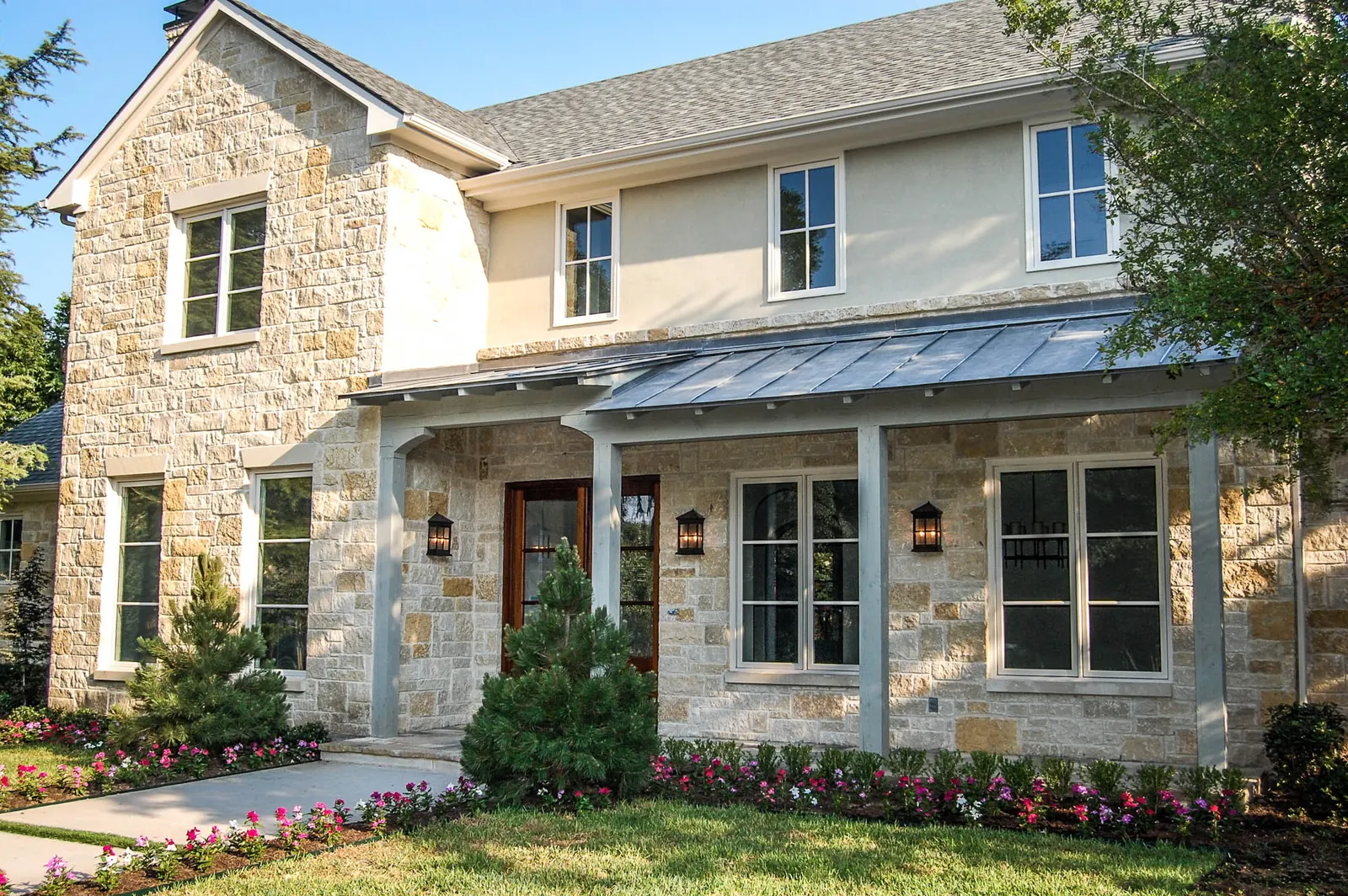
Native limestone, standing-seam metal roofs, generous porches, and simple, strong forms. Hill Country architecture grew out of the materials and weather of Central Texas, and its best qualities (shade, natural materials, easy indoor-outdoor living) translate beautifully to Dallas.
Blended with transitional interiors that are bright, open, and uncluttered, it becomes one of the most livable styles we build. 5540 Caruth pairs native stone and warm wood outside with clean, light-filled rooms within.
Classic transitional
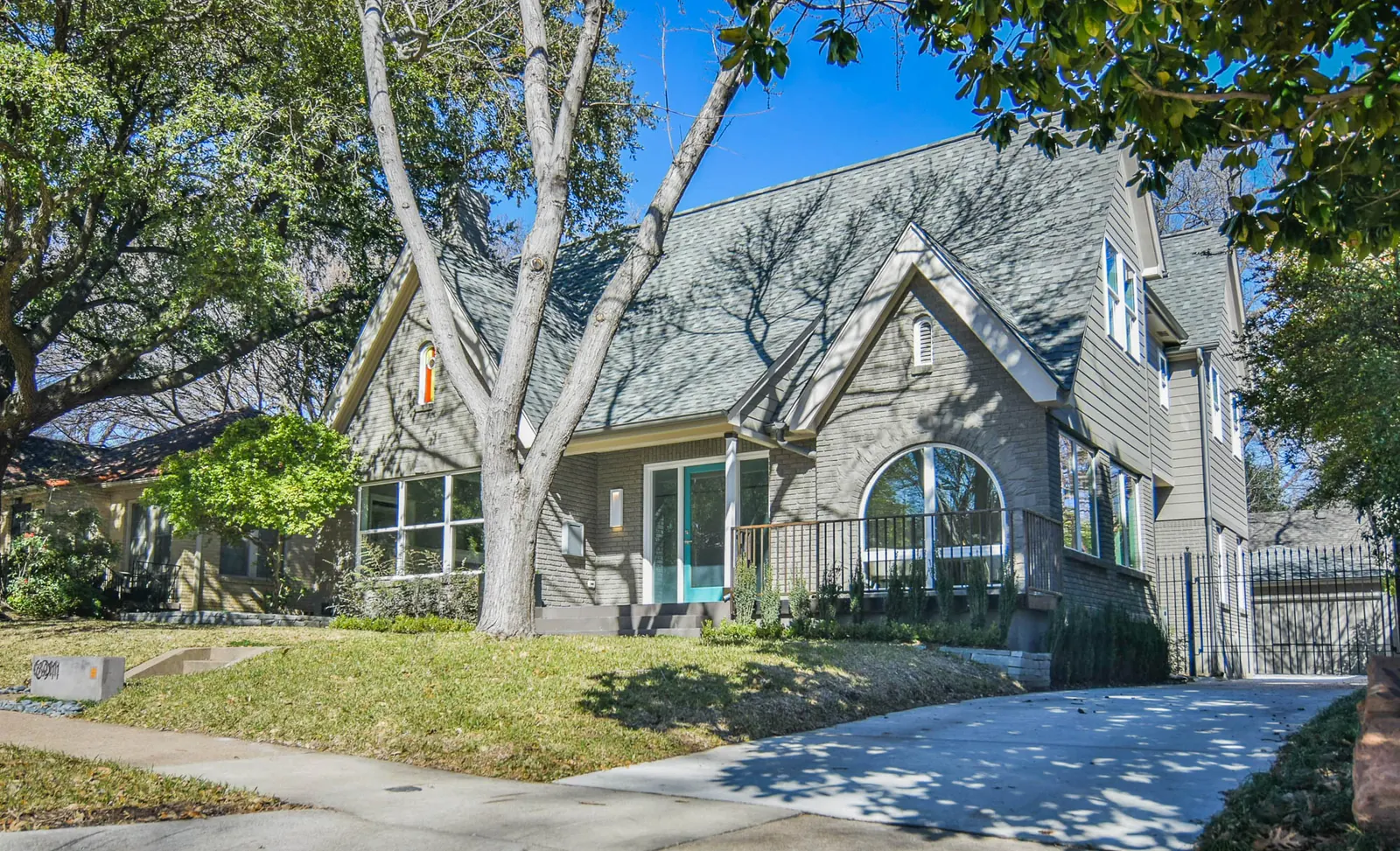
Transitional homes keep the proportions and materials of traditional architecture (painted brick, pitched roofs, symmetry, crown and trim) while opening the plan and simplifying the detail. It is a quietly confident style that fits naturally on older, tree-lined streets. 5517 Greenbrier is a good example: familiar from the curb, open and modern in how it lives.
Modern traditional
Take a traditional form, say a steep gable or a brick cottage, and render it with modern discipline: larger glass, minimal trim, a restrained palette. Done well, the result feels rooted and fresh at the same time. 6911 Pasadena is a modern take on traditional living, with open volumes and generous glass inside a familiar silhouette.
Contemporary
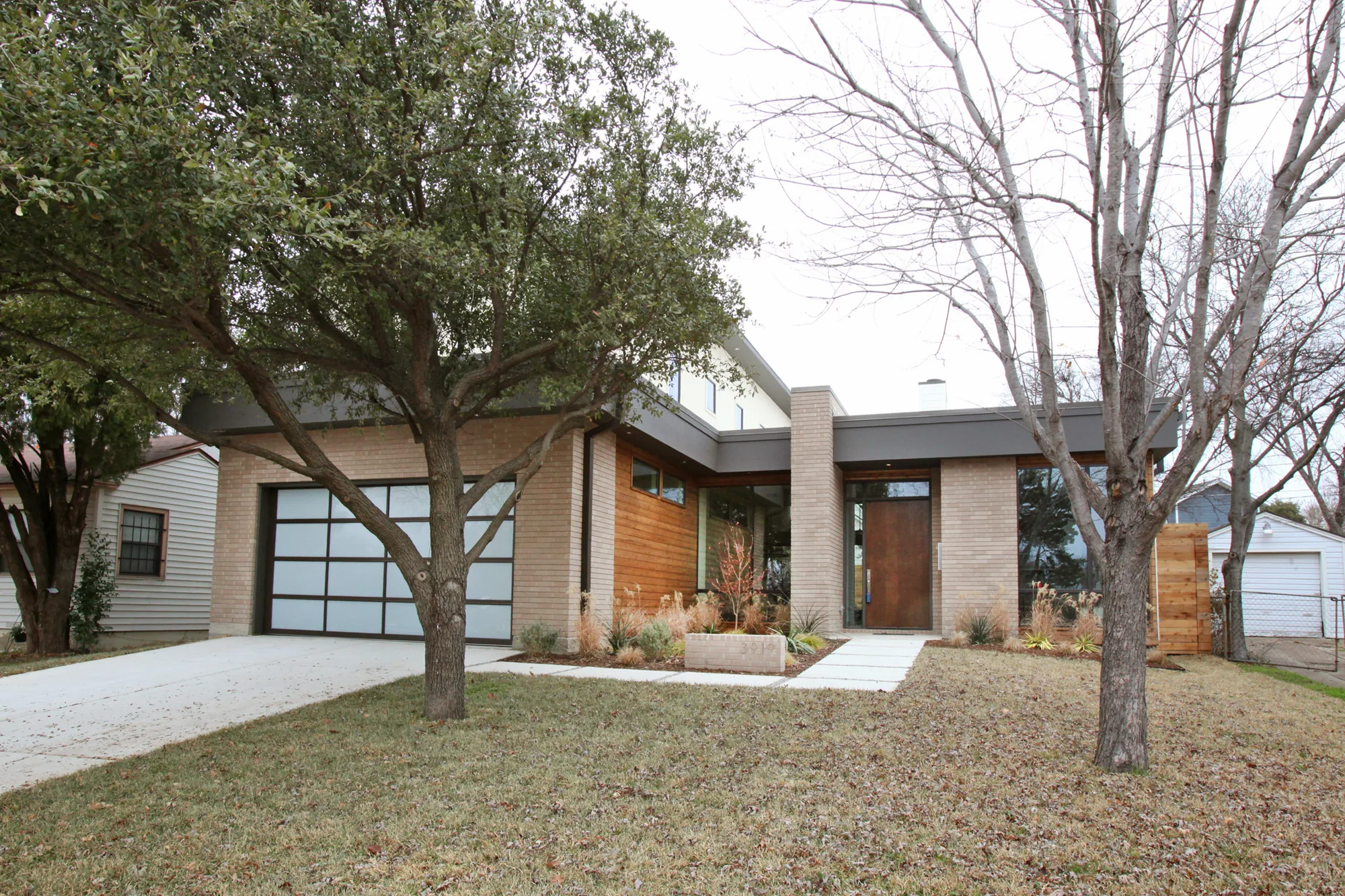
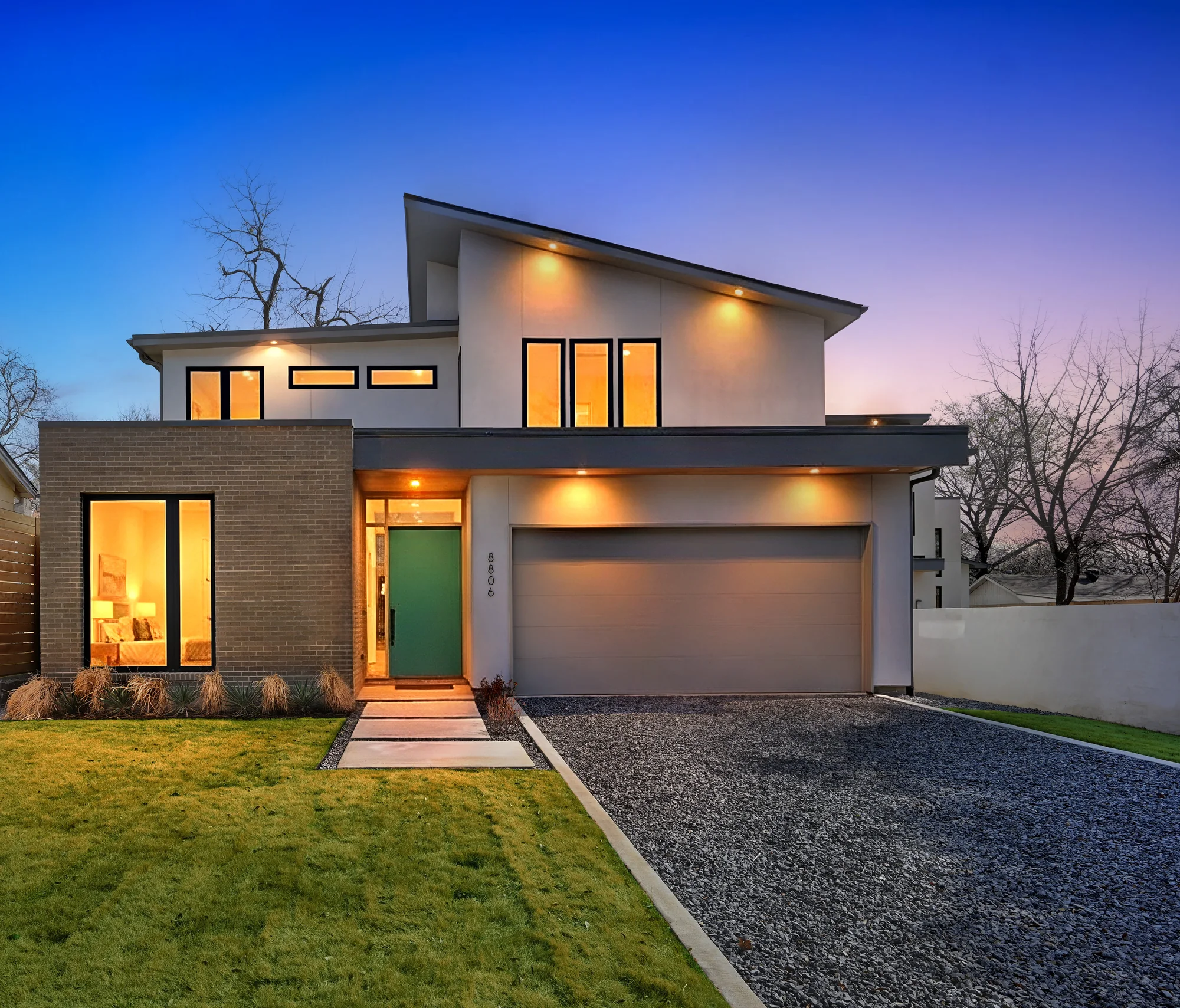
Flat and shed roofs, strong horizontal lines, large expanses of glass, and a disciplined mix of materials such as wood, brick, stucco, and metal. Contemporary homes live openly and bring in enormous light. In Dallas, the key is managing that light: deep overhangs, carefully placed glazing, and high-performance glass keep a beautiful house from becoming an oven in August.
Contemporary design is also the least forgiving of sloppy execution. With no trim to hide behind, every joint, reveal, and transition shows. Both 3919 Lively Ln and 8806 Diceman rely on precision as much as on design.
Select materials authentic to a home’s architecture, rather than simply following what’s fashionable.
How to choose
- Start with how you live. Formal or relaxed? Enclosed rooms or open space? Lots of glass, or intimacy and shade? The answers point toward a style more reliably than photos do.
- Look at the street. A new home should be a good neighbor. That does not mean copying, but it does mean respecting scale, setback, and material.
- Consider the climate. Every style can work in Dallas, but each needs to be adapted for heat, sun, and storms. We cover this in Built for North Texas.
- Commit to authenticity. Whatever you choose, the materials and details need to be real. That is what makes a house age gracefully rather than date.
- Choose your architect accordingly. Architects have strengths. Find one whose built work in your chosen style you genuinely admire.